


Ethiopia - Taferi Kelu
Ethiopia - Taferi Kelu
A balanced Ethiopian coffee with soft fruit sweetness and a delicate tea-like character. A lovely choice when you fancy exploring something a little different.
What does it taste like? • Plum • black tea • orange • milk chocolate
Couldn't load pickup availability
Free local delivery within 6 miles
Free UK delivery on orders £15+
Plum sweetness and a bright orange lift sit alongside black-tea notes and a soft milk-chocolate finish. This washed coffee offers a gentle balance of fruit and chocolate, with plenty to enjoy as you sip.
Medium roast
Medium roast
All our beans are medium roasted to preserve their natural character and avoid the bitterness of over-roasting


The coffee
- Cup score: 82
- Varietal: Enat Buna, 74110, 74112
- Process: Washed
- Altitude (masl): 1900-2100
Meet the farmer
This coffee from Taferi Kela, Sidamo, Ethiopia comes to us through our friends at Bette Buna.
Bette Buna literally translates to ‘House of Coffee’ and this company has been deeply rooted in the village ever since Grandfather Syoum and Grandmother Emame asked Dawit and Hester to take over their farm, but more importantly, their responsibility for building the community of Taferi Kela. Even though this village shares a mountain range with better-known Sidamina producers, it has been overlooked so far, and no other company or industry of any type works in this area.

Where it's grown
Coffee production in Ethiopia accounts for about a third of the country's GDP but more than 90 percent of people working in coffee don’t make a livable income. Bette Buna has set out to change that in their community. They teach their community farmers to improve their soil, grow back agro-forestry systems, and teach the importance of picking ripe cherries. Ripe cherries weigh more and produce better coffee, so the farmers get paid more by weight, and also receive a quality premium.
Perhaps most importantly, they distribute more than 350,000 healthy seedlings every year from their in-house nursery. These seedlings are climate-change adapted varietals, and on average the farmers who plant them make minimum $2 per year per seedling once the trees are grown. This means an economic impact in the area of more than $650,000 a year in a region where the average household income is less than $50 per month for an average family size of 9 people.
Equal Opportunity Employment and Transparent Supply Chains.
Bette Buna is an equal opportunity employer, which is rare in a culture that doesn't typically provide meaningful work for differently abled or disabled people. Their nursery employs people with disabilities (particularly deaf people), families of people with disabilities, as well as other largely disenfranchised groups such as single mothers who struggle to find work, and especially work that accommodates childcare for working mothers in an agrarian society.
With Bette Buna, the traceability is exceptional. Every lot specifically tracks and maps the people involved at each stage of production, from the people who picked the cherries to those who processed and milled the coffee. This level of transparency is almost unheard of in Ethiopia. Not only do we know we’re getting the same coffees we tasted pre shipment, but we also know that the people who did the work are getting fair wages — everyone involved is adding value and being valued. This transparency work has the additional benefit of meaning Bette Buna is prepped for EUDR compliance.
How it's processed
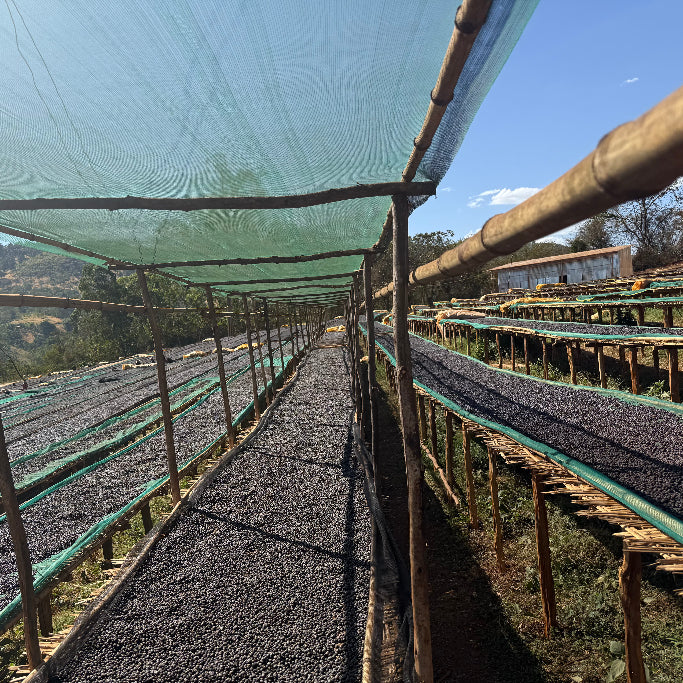
It is grown by community farmers in Taferi Kela and processed by Bette Buna at their washing station. It’s a classic washed Ethiopian coffee: First depulped, then fermented for 24-36 hrs depending on the temperature. Fermentation happens in concrete basins topped with water. It’s a low oxygen but not completely anaerobic environment. Next it was washed and floaters/defects removed. Then 8-15 days on raised, covered drying beds followed by rest time in the warehouse to stabilize the coffee and reach the correct moisture level. The different ‘lots’ are different processing runs that happened over the course of the season.
